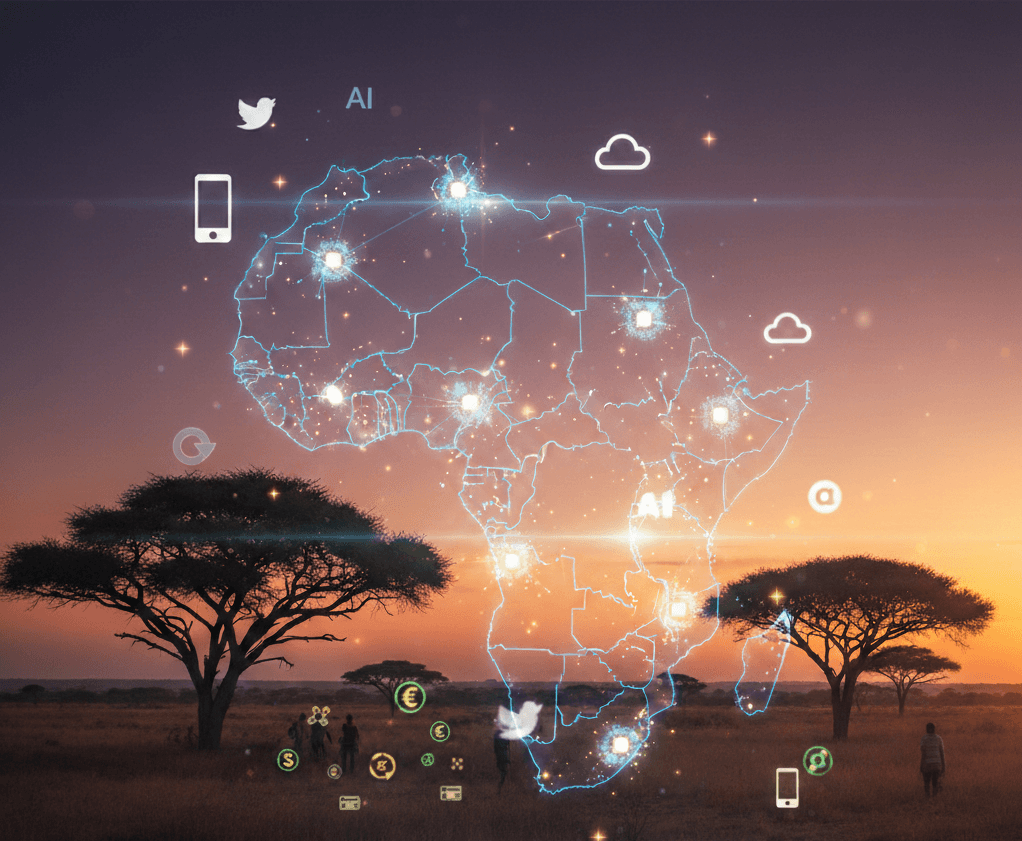
Discover top custom software development trends shaping Africa in 2026, from agentic AI and embedded finance to offline-first apps and sovereign AI.
Loading content…
Discover top custom software development trends shaping Africa in 2026, from agentic AI and embedded finance to offline-first apps and sovereign AI.
Loading content…
Africa’s digital economy is accelerating at unprecedented speed. The custom software development market in the Middle East & Africa reached ~$3.17 billion in 2024 and is projected to grow at a 21% CAGR through 2030 (source: Grand View Research via Medium analysis). Meanwhile, AI's economic impact on the continent could reach trillions by 2030.
For businesses investing in custom digital product development, 2026 is about embedding forward-looking trends strategically, not chasing hype. At Geninworld, we help pan-African companies build products that leverage these shifts for real competitive advantage.
Here are the seven trends defining custom software development in Africa this year.
Agentic AI represents the next evolution: autonomous systems that perceive, reason, plan, and execute tasks independently.
In Africa, agentic AI is already transforming logistics (predictive routing in Kenya), agriculture (autonomous crop monitoring), and fintech (intelligent fraud detection). Oxford Economics notes that agentic systems could deliver a major productivity leap for the continent by automating skilled tasks while leveraging Africa's young, tech-receptive workforce (CNBC Africa report).
Why it matters for custom software: Off-the-shelf tools struggle with local contexts (multilingual data, informal economies). Custom agentic solutions provide true autonomy and trust.
These advanced systems demand full integration of strategy, design, and development to avoid costly misalignments → Why Strategy, Product Design, and Web Development Must Work Together.
Embedded finance integrates loans, insurance, payments, and more directly into non-financial apps i.e ride-hailing, e-commerce, agritech.
By 2026, non-fintech sectors in Africa will increasingly monetize through embedded products, with platforms evolving into full financial ecosystems (TechCabal prediction; LinkedIn Kuunda Digital trends).
Why it matters: Only custom development enables seamless, compliant integration that respects local regulations (e.g., M-Pesa evolution) and builds user trust.
This trend amplifies why custom web solutions outperform generic platforms in Africa's digital economy → How Custom Web Solutions Drive Business Growth in Africa’s Digital Economy.
Unreliable connectivity remains a reality across much of Africa. Offline-first design (local data priority + intelligent sync) combined with edge computing is essential for rural, low-bandwidth, or outage-prone environments.
NGOs, fintech, and field services increasingly rely on this architecture for resilient data collection and operations (EpixelSoft on offline-first for NGOs).
Why it matters for custom development: Bespoke solutions can be engineered specifically for Africa's network realities, something generic SaaS rarely achieves.
The right tech stack is foundational here — modern frameworks must support offline capabilities natively → How to Choose the Right Tech Stack for Custom Digital Product Development.
Low-code platforms + AI coding assistants (e.g., generative tools) are slashing time-to-market and costs — ideal for African startups and SMEs needing rapid iteration.
Why it matters: Top custom teams blend these tools for speed without sacrificing security or differentiation.
Data sovereignty and cultural relevance drive demand for localized/large language models trained on African languages, datasets, and contexts.
African initiatives (e.g., sovereign clouds, regional AI infrastructure) are accelerating to keep data local and models context-aware (Brookings on sequencing AI adoption; CIGI on Africa's AI strategy).
Why it matters: Global models often fail on local nuances — custom solutions enable ownership and fine-tuning.
Energy constraints and data center limitations push "green software": lightweight code, efficient algorithms, edge processing.
Why it matters: Sustainable custom software lowers costs and appeals to impact investors — increasingly important in Africa.
As agentic AI and embedded finance scale, cybersecurity shifts to foundational (zero-trust, AI-specific defenses).
Why it matters: Breaches erode trust — especially in fintech and government-adjacent platforms.
Security must be baked into tech stack selection from day one → How to Choose the Right Tech Stack.
Agentic AI + embedded finance — creating new business models in fintech, logistics, and commerce.
Yes — when combined with custom code for differentiation, security, and offline needs.
AI-assisted/low-code can cut timelines 30–50%, but true custom (offline-first, sovereign AI) requires strategic investment for higher long-term ROI.
For competitive edge and scalability in local markets, yes especially when aligned with 2026 trends.
2026 is Africa's year to define its digital future, not follow global trends. Businesses that treat custom software development as a strategic asset will lead.
At Geninworld, we're already building products that harness these trends for Kenyan and pan-African clients.
👉 Ready to future-proof your digital product in 2026?
Book a free strategy session with Geninworld today